
awards
WiWo Award TRUSTEQ
BrandEins Berater 2026 Award
TRUSTEQ kununu awards
TRUSTEQ
CooperativeExcellence

A new era of digital identity in Europe begins

The EUDI Wallet starts


Imagine the following scenario:

It’s a warm Sunday evening in May 2027. Lia moved from Milan to Munich two weeks ago and is about to start a new job there. Her start date is in three weeks, her first salary still a month away. Her Italian bank account remains active, but her new employer needs a German IBAN by Friday.

In the past, this would have meant: booking a VideoIdent appointment, holding an ID card up to the camera, obtaining proof of residence from Italy, printing out forms, signing them, scanning them, and then waiting three business days for a response after submission.

But today, Lia opens her EUDI-Wallet. Three minutes later, she has everything she needs.

It still sounds more like wishful thinking than reality. However, since an EU directive came into force last year, this is now likely to change. Here is everything you need to know about the EUDI-Wallet – at a glance.

What is behind the EUDI-Wallet, and what does it mean for us?

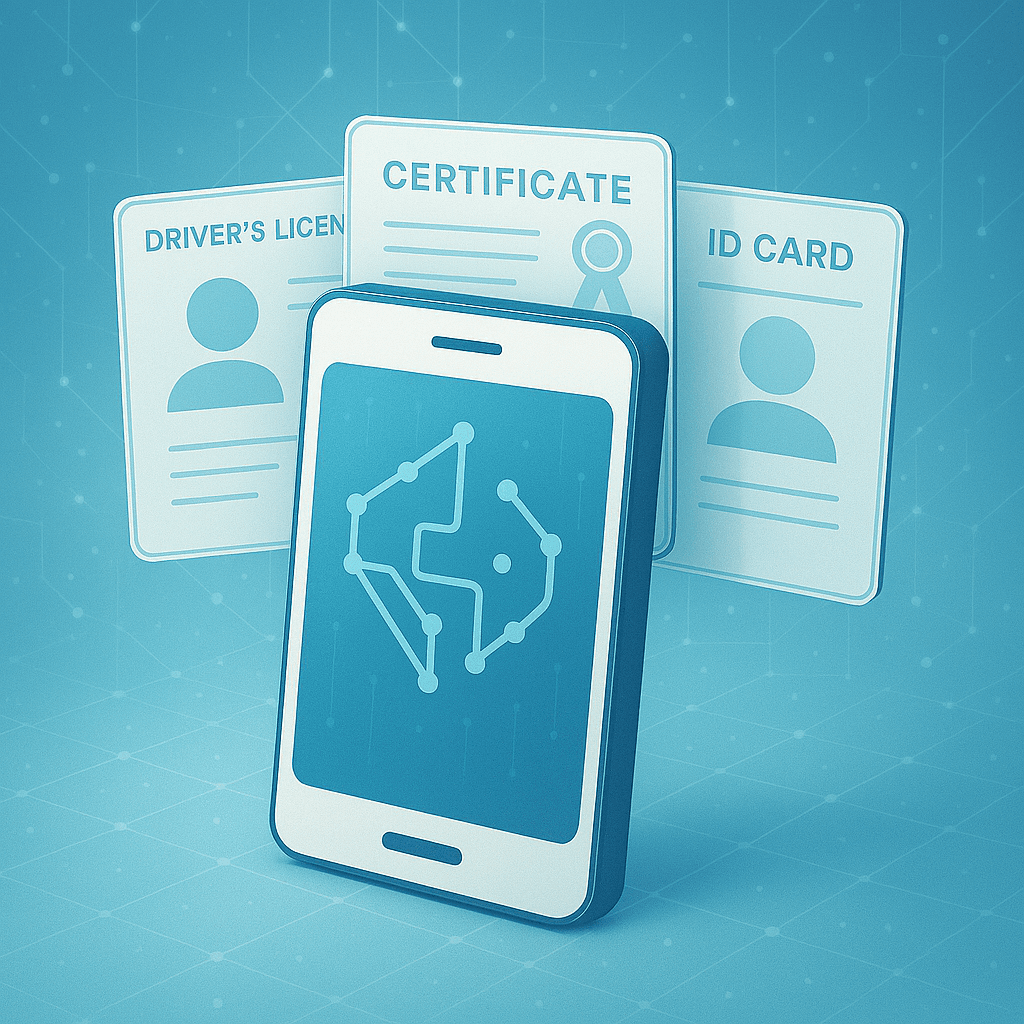
  • The EUDI-Wallet (“EU Digital Identity Wallet”) is a digital wallet that allows citizens to securely store, manage, and selectively share their identity in a legally valid manner. It brings together what is currently scattered across dozens of apps, portals, and filing cabinets: ID cards, university degrees, insurance policies, bank credentials, and much more.
  • In addition, it enables qualified electronic signatures (QES) as well as secure payment authorisations directly from the wallet. Its range of applications extends from opening a bank account - like in Lia’s case - to signing loan agreements or potentially accessing digital medical records from a specialist while abroad within the EU.
  • Under the eIDAS 2.0 Regulation, the EUDI-Wallet therefore enables legally binding, secure authentication at a high level of trust.
No magic, but solid architecture

How the EUDI-Wallet works

The Wallet operates with structured, cryptographically secured attributes. That means no scans and no PDFs, but machine-readable, verifiable data points that are legally equivalent to paper documents. These can be divided into four types:

  • PID Personal Identification Data: Public authorities, such as a local registration office, issue official identity documents—for example, a national ID card.
  • PuB-EAA Public Body Authentic Source Electronic Attestation of Attributes: Authorities such as tax offices issue documents that certify specific attributes of a user, for example a tax status.
  • QEAAQualified Electronic Attestation of Attributes: Organisations such as universities can issue electronic educational credentials, such as a bachelor’s degree certificate.
  • EAA Electronic Attestation of Attributes: Less complex issuers, such as public transport providers, can issue non-sensitive credentials, for instance a digital train ticket.
EUDI Wallet Update

Four steps, just a few minutes

Lia’s example illustrates how the technical workflow is designed to enable fast processes:

Storyline zur EUDI Wallet

1. Cross-border KYC: Efficient and selective

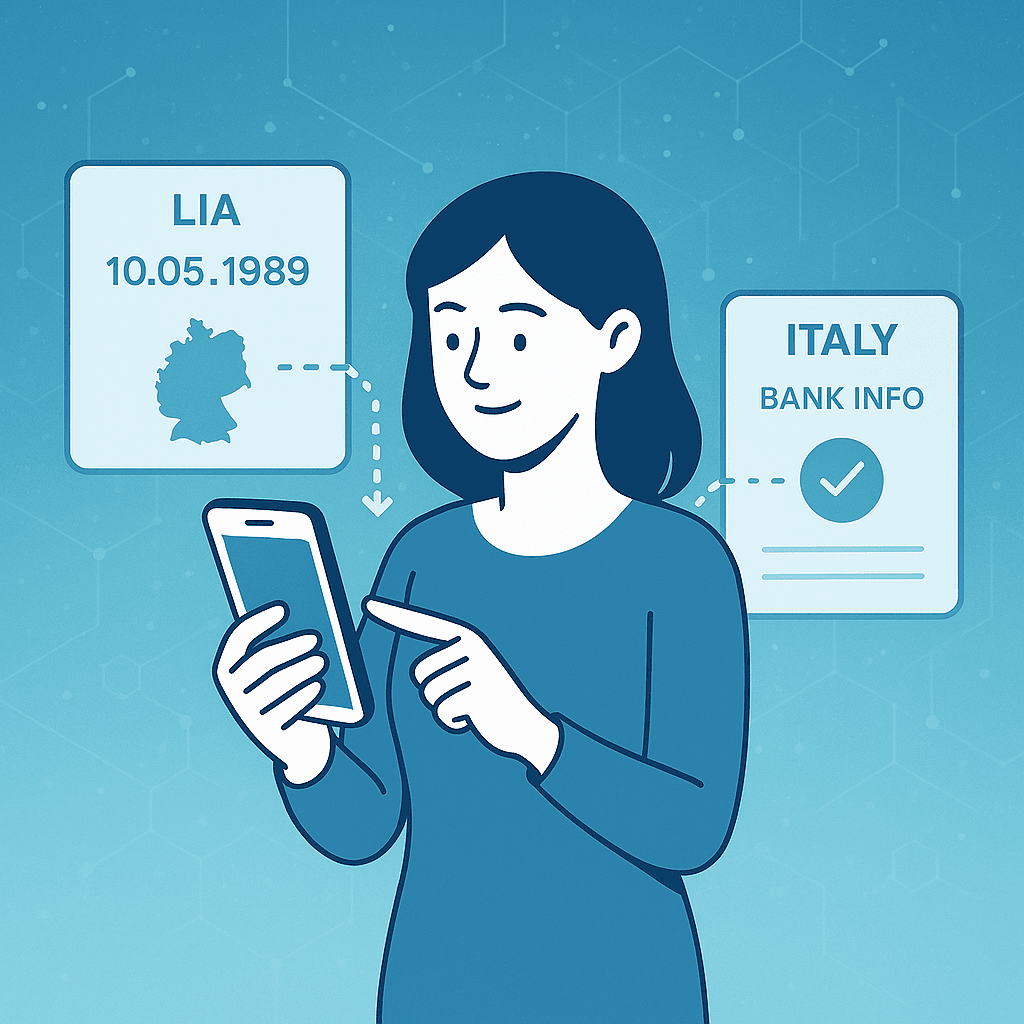
Lia uses her bank’s wallet to transmit data across borders. For the Know Your Customer (KYC) process, she shares targeted PID attributes: her name, date of birth, nationality, her Munich residence address, and the PuB‑EAA issued by the Italian tax authority containing her Codice Fiscale. No photo and no ID number are shared - only the minimum necessary information - while everything else remains cryptographically sealed. Selective disclosure ensures data protection. The result: two attributes, two EU member states, and one verified dataset.

2. Creditworthiness: Directly from the bank

For opening an investment account, Lia shares a verified EAA from her Italian bank confirming good creditworthiness and regular income. Neither her IBAN nor her account balance is disclosed. Instead, only specific data points are transmitted securely. The new bank automatically verifies the cryptographically signed data seal within milliseconds - without manual intervention and without the risk of identity fraud through forged documents. Secure identity processes are accelerated, while Lia retains full control and confidentiality over her financial data.

3. Tax identification: Automated

In the future, the German tax ID will be stored directly in the wallet as a PuB‑EAA issued by the Federal Central Tax Office. Lia can transmit the data without additional forms or follow-up procedures. The entire process is automated and reliably completed within seconds. This reduces administrative effort and increases efficiency in handling tax data - a solution that simplifies administrative processes while making the tax ID securely accessible.

4. Confirmation: Biometric and legally binding

At 9:14 p.m., Lia confirms the release of her attributes via biometric authentication. Her account application is completed the very same evening, and her IBAN is available in the app. What previously took three working days and a stack of documents in two languages now takes three minutes. The EUDI-Wallet is an EU‑legally qualifying means of identification and, under eIDAS 2.0, enables legally binding, secure authentication at the “high” level of assurance - which is particularly relevant for sharing sensitive documents in everyday life.

Architecture & Reference Frameworks (ARF)

All of these steps run smoothly, interoperably, and across Europe as a result of the Architecture & Reference Framework (ARF)—the technical foundation of the EUDI-Wallet. This continuously evolving, Europe‑wide coordinated wallet blueprint ensures that wallets, banks, public authorities, and private service providers can work together seamlessly.

In Germany, the Federal Office for Information Security (BSI) defines the national architectural framework on this basis through Technical Guideline TR‑03189. It specifies the security requirements that wallets, issuers, and service providers must meet. Banks, insurance companies, and technology providers are currently awaiting the publication of the new guideline in order to integrate their systems in a legally compliant manner.

Roadmap: When will the EUDI-Wallet be available in Germany?

The legal foundation has been in place since May 2024 with eIDAS 2.0, which provides the common technical basis for the cross‑border use of the wallet within the EU. National implementation, however, is still underway.

Currently still open are:

  • the final certification requirements of Technical Guideline TR‑03189 and a fully developed interoperability infrastructure for EAA issuers,
  • the closing of regulatory gaps between PSD2 and eIDAS 2.0.

Both are expected in 2026 and represent the decisive starting signal for banks and insurance companies.

Why the EUDI-Wallet is more than compliance

By the end of 2027, regulated companies will be required to accept the Wallet. Those who treat the EUDI-Wallet purely as a compliance project, however, are leaving its true potential untapped.

TRUSTEQ supports you in successfully overcoming all challenges.

With our expertise, we help you understand and effectively implement the technical and regulatory requirements of the EUDI-Wallet.

Whether it’s integrating the wallet, developing tailored IT strategies, or closing regulatory gaps, we work with you as a trusted partner to fully unlock the value of the EUDI-Wallet.

Schedule an expert meeting
Cybersecurity

More practices

Our Cybersecurity pillar offers many additional insights and practices related to the EUDI-Wallet.

Do you have questions?

Get in touch with us directly. We will get back to you as soon as possible.